Masai Mara National Park
December 20, 2023
Gorilla Trekking in Rwanda and Uganda
December 10, 2025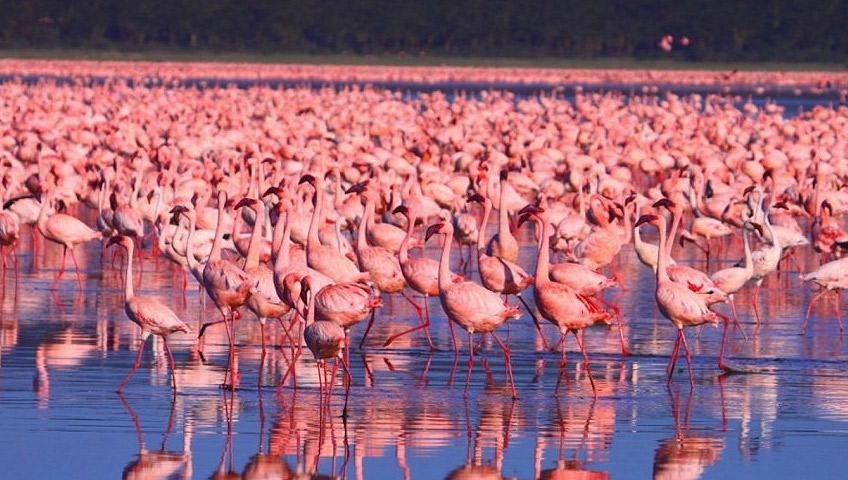
Lake Nakuru National Park
Located in the Rift Valley areas of Kenya, Lake Nakuru National Park is the home of flamingoes in East Africa, established in 1968. Despite the epic Lesser and Greater flamingo wonder in Lake Nakuru National Park, the site offers one of the best Big Five adventures in Kenya as it host a huge population of lions, elephants, leopards, rhinos, and buffaloes .The lake has become world famous for these birds, who visit the lake to feed on algae that forms on the lake bed. They move back and forth, feeding and occasionally and spectacularly taking to flight, filling the sky over the Lake with Colour.
This is a major National Park and an important Sanctuary for rhinos in Kenya. Both Black and White Rhino are found here, and are often seen resting under acacias by the Lake Shore. The Park abounds with game. There are huge herds of Waterbuck, Zebra, Buffalo, the endangered Rothschild Giraffe and more. This is one of your best chances of seeing Leopard in Kenya, and there are several large prides of Lion. Exploring beyond the Lake is always rewarding and there are Forests, Cliffs, Waterfalls and more to be found here. Nearby Nakuru Town is a busy and thriving Local centre with a bustling Market.
Lake Nakuru is a shallow, strongly alkaline lake set in a picturesque Landscape of surrounding Woodland and grassland. The Landscape includes areas of marsh and grasslands alternating with Rocky Cliffs and outcrops, stretches of acacia Woodland and rocky hillsides covered with an Euphorbia Forest. The Lake’s catchment is bounded by Menengai Crater to the North, the Bahati Hills to the North East, the Lion Hill Ranges to the East, Eburu Crater to the Sout,h and the Mau Escarpment to the West. Three Rivers, the Njoro, Makalia, and Enderit, drain into the Lake. Lake Nakuru was first gazetted as a Bird Sanctuary in 1960 and upgraded to National Park status in 1968.
A Northern extension was added to the Park in 1974, and the Lake was designated as a Ramsar site in 1990. The foundation of the Park’s food chains is the Cyanophyte Spirulina Platensis, which can support huge numbers of lesser Flamingo. During peak season, over one million Flamingos congregate on the Lake, plus half a million Pelicans. The Park also contains Kenya’s largest population of Rhinos. The surface of the Lake occupies about a third of the Park. The lake supports a dense bloom of the blue-green Cyanophyte Spirulina Platensis from which it derives its colour. It is a food source for Flamingos. The Lake is fringed by alkaline swamps with areas of sedge, Cyprus Laevigatus, and Typha marsh along the river inflows and springs. The surrounding areas support a dry transitional savanna with Lake margin grasslands.
What To Do in Lake Nakuru National Park-Activities & Attractions
Birding or viewing the Flamingoes
The wildlife sanctuary of Lake Nakuru National Park is renowned for the great infestations of Lesser flamingoes which form a pink-like blanket on the surface of the water. There are more than one million lesser flamingoes breeding in the alkaline waters. According to ornithologist Roger Tory Peterson, this site is the “ greatest bird spectacle in the world,” making this place a must-visit attraction during the Kenya birding tour.
Big Five watching
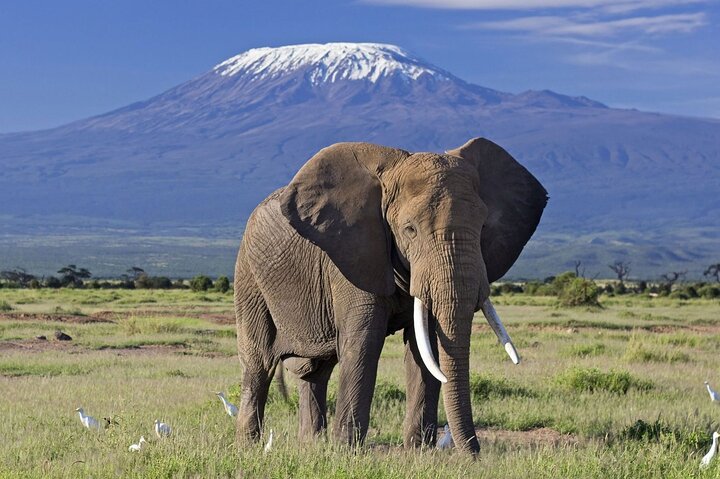
Lake Nakuru National Park is a top destination for Big Five tours in East Africa and it hosts a huge number of the animals. During the time in Lake Nakuru Park, the Big Five animals are some of the frequent animals to see especially lions, leopard, elephants, buffalos among others. The bird sanctuary is also adored for its large populations of elephants like those in other Kenya national parks like Masai Mara National Reserve, Amboseli National Park among others.
Best time to visit –All year round
Like other national parks in East Africa, Lake Nakuru National Park can be visited all year in both the dry and wet months of the year. However, the dry periods from June to September are the most preferred because it is easier for the vehicles to move on the less muddy tracks and the far and distant animals can be spotted in the short savannahs. The wet season comes with low visitations; therefore, the travelers can enjoy the whole park to themselves while on the Kenya wildlife trip.