
Semliki National Park
December 20, 2023
Lake Mburo National Park
December 20, 2023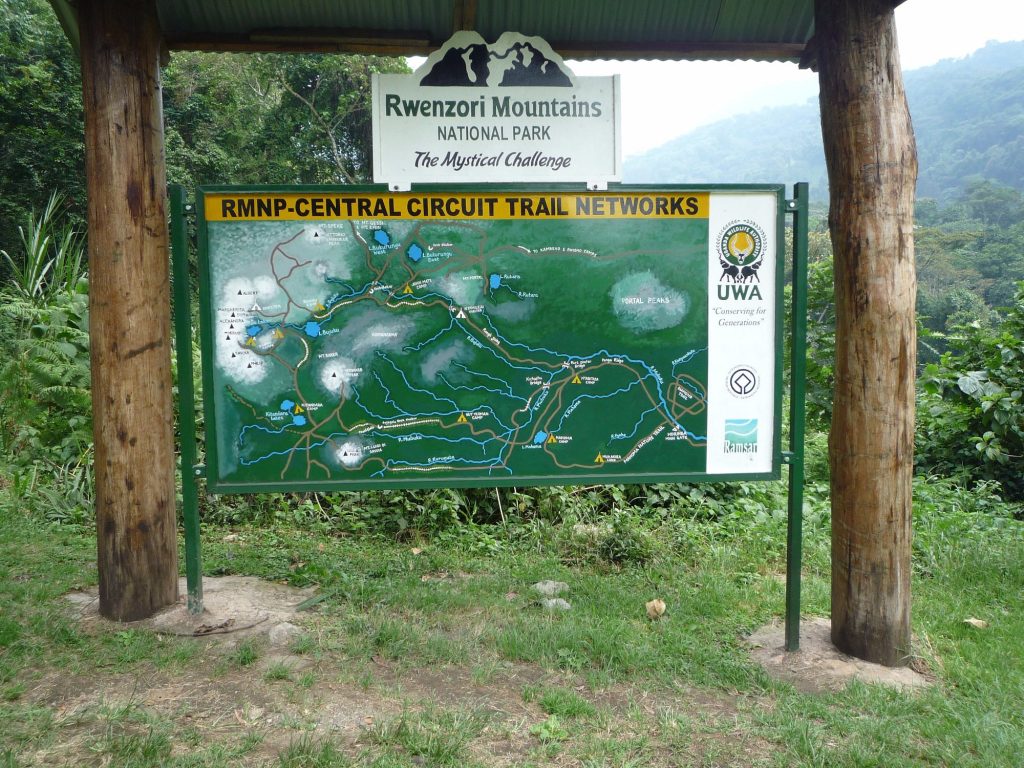
Rwenzori Mountains National Park
The Rwenzori Mountains National Park is located in the western part of Uganda, alomg the border with the Democratic Republic of Tanzania. Although unpopular for wildlife safaris in Uganda, this National Park is a remarkable destination for Mountain Climbing & Hiking in Uganda. Mount Rwenzori National Park is home to the Rwenzori Mountains, the highest Mountain in the Country and the third highest on the African Continent. This Park is also a UNESCO World Heritage Site . Almost 1,000 km2 (386 sq mi) in size, this National Park is a remarkable destination for Uganda adventure tours.
History of Rwenzori Mountains National Park
Rwenzori Mountains National Park was officially gazetted in 1991 as a protected area. Just a few years later, in 1994, the park received international recognition when it was designated a UNESCO World Heritage Site. This status was awarded in acknowledgment of the park’s exceptional natural beauty, dramatic mountain scenery, rare alpine ecosystems, and outstanding biodiversity, which together make the Rwenzori Mountains one of Africa’s most unique conservation areas.
Despite its global significance, the park faced serious challenges in the late 1990s and early 2000s. From 1997 until June 2001, rebel militias occupied parts of the Rwenzori Mountains, creating prolonged insecurity within and around the park. This period of conflict greatly disrupted conservation activities, limited access for park management authorities, and posed risks to both wildlife and local communities. Tourism activities were also severely affected, reducing revenue that would normally support conservation and community development initiatives.
Due to the instability and the shortage of financial and technical resources needed to effectively manage and protect the park during this time, UNESCO placed Rwenzori Mountains National Park on its List of World Heritage in Danger. The park remained on this list from 1999 until 2004. This designation highlighted the threats facing the site and drew international attention to the urgent need for improved security, management capacity, and conservation support.
Following the restoration of peace and gradual improvement in security conditions, significant efforts were made to strengthen park management and conservation programs. These efforts included rebuilding infrastructure, enhancing ranger patrols, and re-establishing tourism activities. As a result of these improvements, the park was eventually removed from the List of World Heritage in Danger in 2004.
Today, Rwenzori Mountains National Park stands as a symbol of resilience and successful recovery. It continues to be celebrated for its spectacular landscapes and ecological importance, while also serving as a reminder of the challenges protected areas can face during times of conflict and limited resources.
Geography of Mount Rwenzori National Park
Rwenzori Mountains National Park is found in southwestern Uganda, along the eastern edge of the western branch of the African Rift Valley, also known as the Albertine Rift. The park stretches along Uganda’s border with the Democratic Republic of the Congo (DRC) and shares a 50-kilometer (31-mile) boundary with Virunga National Park in the DRC, which is also recognized as a UNESCO World Heritage Site. Administratively, the park lies within the districts of Bundibugyo, Kabarole, and Kasese, and is located about 25 kilometers (16 miles) from the town of Kasese.
Covering an area of approximately 996 square kilometers (246,117 acres), the park is largely mountainous, with around 70 percent of its terrain rising above 2,500 meters (8,202 feet) in elevation. It stretches roughly 120 kilometers (75 miles) in length and about 48 kilometers (30 miles) in width. The park protects much of the central and eastern sections of the Rwenzori Mountains, a dramatic mountain range that rises sharply from the surrounding dry plains just north of the equator.
The Rwenzori Mountains are among Africa’s most impressive highland systems and are notably higher than the European Alps. Despite their equatorial location, the peaks are permanently ice-capped. Mount Stanley, the highest massif in the range, lies within the park and is home to Margherita Peak, one of its twin summits. Standing at 5,109 meters (16,762 feet), Margherita Peak is the third-highest mountain peak in Africa. The park also contains Africa’s fourth- and fifth-highest peaks, Mount Speke and Mount Baker
In addition to its towering peaks, Rwenzori Mountains National Park is renowned for its striking natural features, including glaciers, snowfields, cascading waterfalls, and scenic alpine lakes. These dramatic landscapes, combined with the park’s unique ecosystems, make it one of the most breathtaking mountain regions on the African continent.